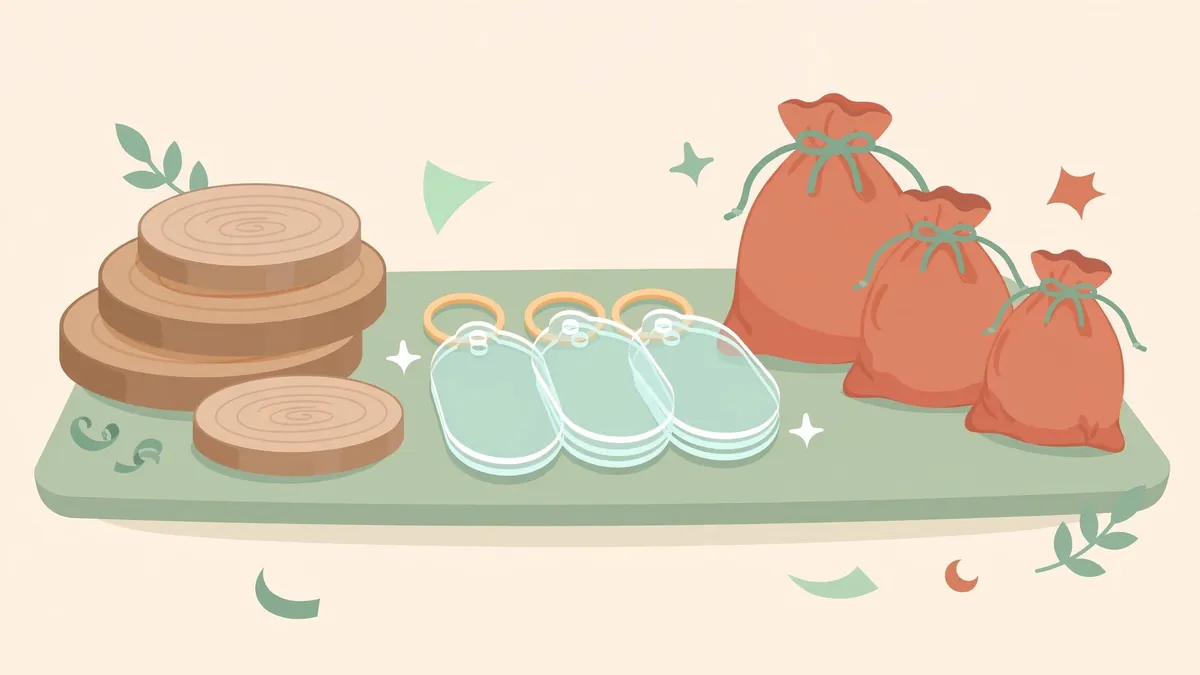
Every beginner asks the same question: what can I actually put vinyl on? These are the blanks worth buying first — wood slices, cuttable basswood, acrylic keychains and ornaments, canvas pouches, and reusable stencil sheets.
How we ranked: beginner-friendliness (minimal prep and special tools), cost per blank in the pack, how well vinyl or HTV adheres to the surface, and how many project types each blank unlocks. Research-based—not a claim that we personally lab-tested every SKU.
Comparison criteria
Can a beginner use it with minimal surface prep and no specialty tools?
Does vinyl or HTV adhere reliably to the surface?
Is the per-blank cost low enough for practice and gifts?
Does it unlock multiple project types, not just one?
1
ARTEZA Natural Wood Slices (45-pack, 2.4–2.8 in)
Best Overall
Pre-sanded, kiln-dried pine — minimal prep before vinyl
45 slices covers ornaments, coasters, and gift tags in one box
Includes jute twine for hanging projects
Who it’s for: Beginners who want the single most versatile blank to start with.
Check current price on Amazon — we don’t hardcode prices.
Quick buying tip
Match the vinyl to the blank: permanent adhesive vinyl for wood and acrylic, HTV for canvas pouches — adhesive vinyl won’t survive on fabric. And peel the protective film off acrylic blanks before applying vinyl, or your design will stick to the film instead of the blank.
What you can make
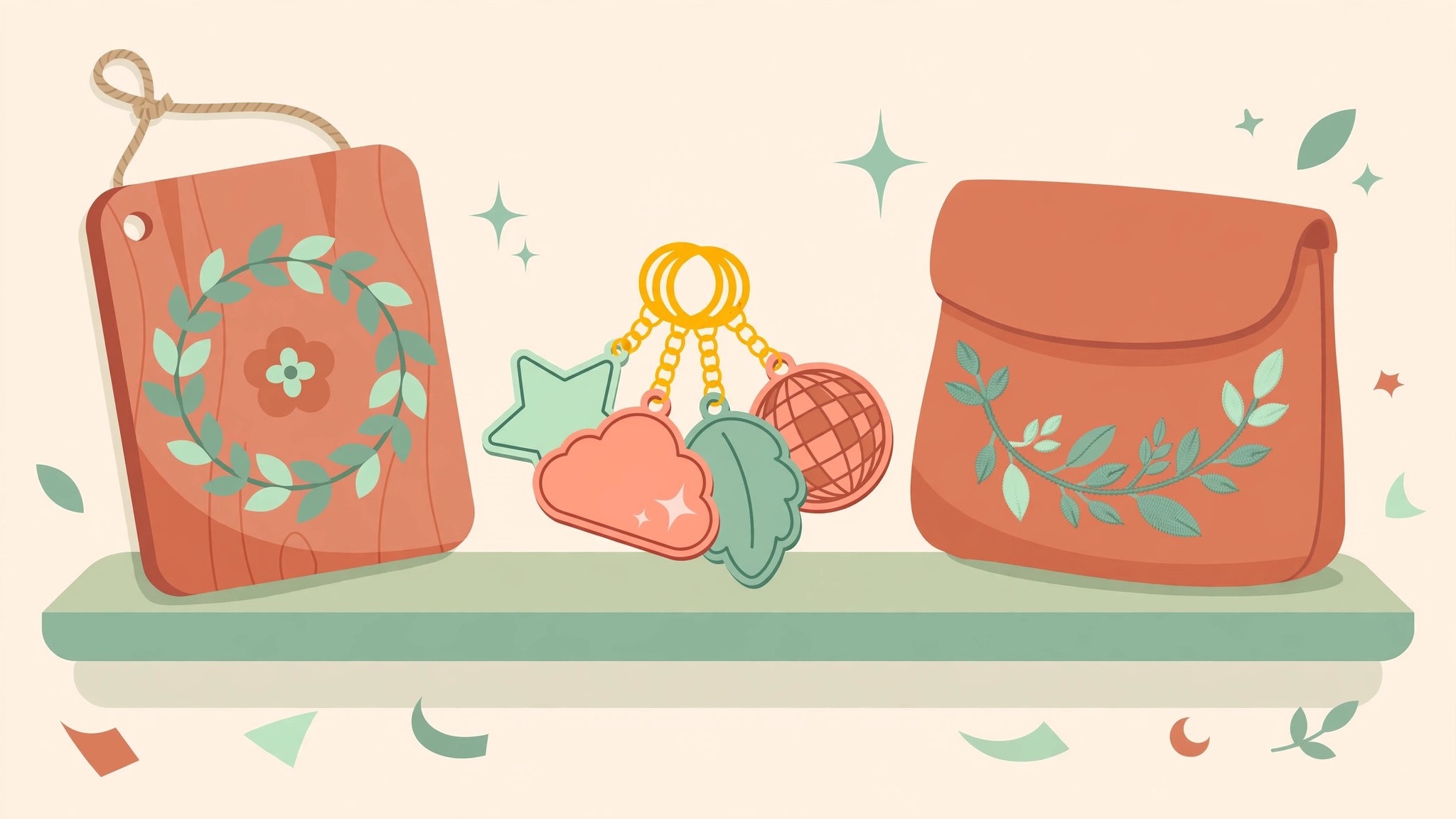
Wood slice ornaments, acrylic keychains, and personalized pouches — the beginner projects these blanks unlock.
Frequently asked questions
What kind of vinyl should I use on wood blanks?
Permanent adhesive vinyl is the standard choice for wood blanks like slices and rounds. It grips the grain far better than removable vinyl, which is designed to peel away cleanly. For a painted-wood look instead, cut a stencil from mylar sheets and apply paint — that method skips vinyl adhesion worries entirely.
Do wood blanks need to be sealed before applying vinyl?
Lightly sanding helps, and sealing is recommended for raw or rough wood. An unsealed, porous surface gives vinyl less to grip, so a thin coat of polycrylic or clear sealer (fully cured before you apply the decal) noticeably improves adhesion and longevity. Pre-sanded, kiln-dried slices like our top pick need the least prep.
What's the difference between permanent and removable vinyl on acrylic blanks?
On smooth acrylic, permanent vinyl bonds strongly and is the right call for keychains and ornaments that get handled. Removable vinyl works for temporary decoration — seasonal designs you plan to peel off later. Either way, peel the acrylic's protective film first and wipe the surface clean so the vinyl adheres to the plastic, not to dust.
Can my Cricut cut basswood sheets, or do I need a special blade?
Only the Cricut Maker family can cut basswood, and only with the Knife Blade — the Explore machines can't do it. Stick to 1/16-inch sheets; thicker stock exceeds what the knife blade handles reliably. Tape the sheet to a StrongGrip mat on all four sides so it can't shift mid-cut, and expect multi-pass cuts.
Where's the cheapest place to buy blanks for practice?
Bulk kits win for practice: the 120-piece acrylic keychain kit in this guide works out to pennies per blank, and the 45-pack of wood slices is similarly cheap per piece. Buy the big multipack for learning, then switch to nicer single-style blanks once your designs are dialed in.